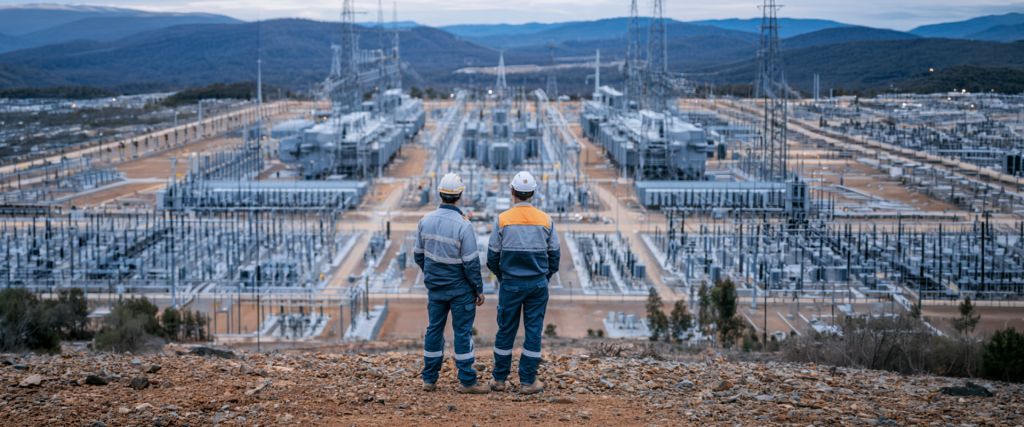
Standby Power Is Only Noticed When It Doesn’t Perform
A standby power system may operate quietly in the background for years without attracting attention. When an AC supply is interrupted, however, it immediately becomes one of the most important systems within the facility, maintaining protection, control and communications while normal power is restored.
If that system doesn’t perform as expected, the consequences often extend well beyond the loss of backup power.
Operational disruption, delayed restoration, increased safety risks, compliance obligations and accelerated asset degradation can all result from a DC power system that is unavailable when required.
For critical infrastructure operators, the true cost of failure is rarely measured by the equipment itself. It’s measured by the impact the failure has on the wider network.
Operational Consequences Extend Beyond the Power System
Critical DC power systems support far more than vrla batteries and chargers.
They provide the dependable DC supply required for protection relays, switchgear operation, SCADA systems, telecommunications equipment and automation platforms that enable critical infrastructure to operate safely.
If standby power is unavailable during a loss of AC supply, these systems may not operate as intended. Fault isolation can become more difficult, switching operations may be delayed and network restoration activities can become increasingly complex.
The operational impact is often disproportionate to the failure itself because multiple critical functions depend on the same DC power system.
The Financial Impact Isn’t Limited to Equipment Replacement
Replacing a failed battery or charger is often one of the smallest costs associated with a critical power incident.
Unplanned outages, emergency maintenance, specialist callouts, operational delays and disruption to planned maintenance activities can all contribute to the overall cost of failure.
Infrastructure operators may also need to bring forward replacement programs, reallocate maintenance budgets or undertake additional testing before returning systems to normal operation.
When assets are geographically dispersed, these costs can increase significantly due to travel requirements, contractor availability and site access constraints.
Reducing lifecycle risk is therefore not simply a maintenance objective. It is also a sound asset management strategy.
Compliance and Risk Management Go Hand in Hand
Critical power systems operate within environments where reliability and compliance are closely linked.
Routine inspection, testing, documentation and verification help demonstrate that systems continue operating as intended while supporting maintenance obligations and engineering governance.
These activities should also align with recognised Australian and international standards governing critical power systems and DC power system installations, supporting long-term compliance, safety and reliability.
Equally important, they provide engineers with confidence that protection and control systems will continue receiving dependable DC power during abnormal operating conditions.
Managing compliance should therefore be viewed as more than satisfying regulatory requirements. It is an important part of managing operational risk.
Preventing Failure Begins Long Before an Outage
Power system failures are rarely the result of a single event.
More often, they develop over time as battery performance changes, connected loads increase, battery charger settings drift, environmental conditions vary or maintenance assumptions no longer reflect the way the system is operating.
These changes may not be immediately visible, which is why proactive inspection, testing, monitoring and lifecycle planning play such an important role in maintaining reliability.
Identifying gradual changes before they affect system performance allows engineers to make planned, evidence-based decisions rather than responding to unexpected failures.
The objective isn’t simply to prevent equipment failure.
It’s to preserve operational continuity.
Reliability Is the Most Cost-Effective Risk Strategy
Perhaps the greatest misconception surrounding standby power is that its value is measured by how often it operates.
In reality, its value is measured by the confidence it provides every day it isn’t required.
Reliable DC power systems reduce uncertainty across Australian critical infrastructure by ensuring protection, control and communications remain available during abnormal operating conditions.
That confidence is achieved through disciplined engineering, structured testing, proactive asset management and lifecycle planning. Not by relying on individual components alone.
Ultimately, the hidden cost of power system failure isn’t the battery, charger or replacement equipment.
It’s the operational, financial and organisational consequences that occur when critical infrastructure loses the dependable DC power it was designed to rely upon.
At Intelepower, we help infrastructure operators reduce that risk through engineered Intelepower DC power systems designed for long-term reliability, resilience and lifecycle performance.
Building Reliability Before Failure Occurs
The most effective way to reduce the cost of power system failure is to prevent it through sound engineering, proactive maintenance and lifecycle planning.
Discover how Intelepower helps critical infrastructure operators improve reliability, reduce operational risk and maximise the long-term performance of their DC power systems.
Explore our DC power systems or speak with our engineering team.