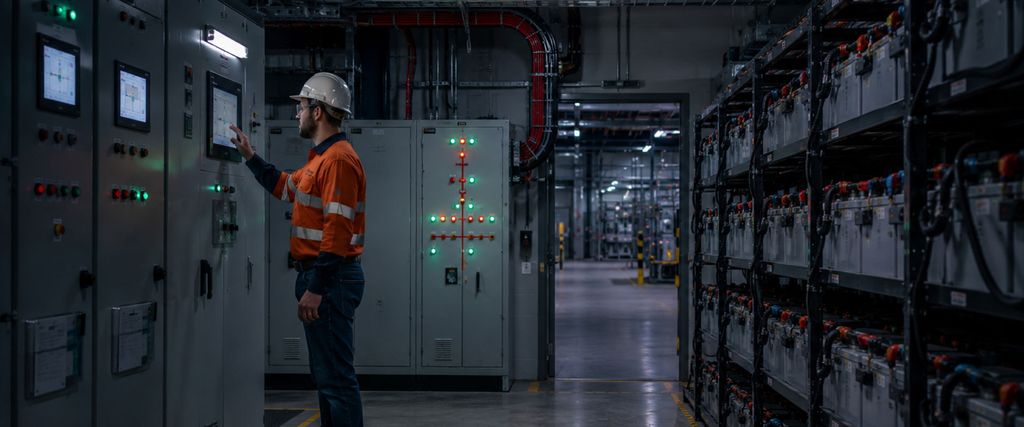
DC Power Systems Are More Than Batteries and Chargers
DC power systems combine batteries, chargers, controls, engineering and supporting infrastructure to provide reliable standby power for critical applications. While batteries and battery chargers are central components, neither operates independently.
A complete system needs to maintain the required DC supply during normal operation, keep the battery system correctly charged and provide dependable standby power when the normal AC supply is interrupted. For utilities, telecommunications networks, transport infrastructure and industrial facilities, achieving this requires more than selecting individual pieces of equipment.
Battery capacity, charger performance, controls, ventilation, physical layout, installation, commissioning, maintenance and lifecycle requirements all need to work together. Understanding these elements as one integrated system is fundamental to designing reliable critical power infrastructure.
Battery Chargers Support the Complete DC Power System
The battery charger performs an essential role during normal system operation, supplying the connected DC loads while maintaining the battery system at the appropriate state of charge so standby capacity is available when required.
Charger selection therefore needs to reflect more than the nominal system voltage. The connected load, battery characteristics, recharge requirements, redundancy philosophy and operational requirements of the site can all influence charger configuration.
For critical applications, the relationship between the battery and charger is particularly important. Charging characteristics need to align with the selected battery technology to support performance and service life, which is why battery chargers and battery systems should be engineered together rather than treated as unrelated equipment purchases.
Battery Systems Provide Standby Capacity
When normal supply is unavailable, the battery system becomes the source of DC power for the critical connected loads. Correct battery system design begins with understanding what those loads are, how they operate and how long they need to remain supported.
Required autonomy, load profile, operating temperature, battery characteristics and expected service life all influence battery sizing and configuration. VRLA and other lead acid batteries are commonly used as standby batteries across critical infrastructure, but selecting the appropriate battery involves more than determining capacity.
The battery needs to be considered within the context of the complete DC power system and the environment in which it will operate.
Battery and Charger Design Life Should Be Considered Together
Critical power systems are long-term infrastructure assets, so equipment design life and expected replacement intervals can have a significant effect on lifecycle planning.
If battery and charger lifecycles are considered independently, an asset owner may face multiple replacement interventions across the operational life of the system. Better alignment between major system components can simplify replacement planning, reduce unnecessary handling and support a more coordinated approach to long-term asset management.
This makes design life an engineering and lifecycle consideration, not simply an equipment specification.
DC Power System Engineering Connects the Components
Individual components only become a complete system when they are engineered to work together. DC power system engineering considers the electrical, physical and operational requirements of the installation as a whole.
This includes understanding critical loads, determining autonomy, sizing batteries and chargers, developing the system architecture and considering redundancy, protection, controls, monitoring and future expansion. Physical requirements are equally important, with room dimensions, equipment footprint, cable routing, ventilation and maintenance access all influencing how the final system is configured.
Bringing these requirements together during the design process helps ensure the proposed equipment can operate as an integrated solution within the actual site environment.
Controls and Monitoring Provide System Visibility
Reliable critical power operation depends on knowing what is happening across the system. Controls and monitoring can provide operators with information on charger operation, battery condition, system voltage, alarms and other important operating parameters.
Depending on the application, information may also be communicated to wider supervisory or control systems, allowing infrastructure operators to monitor geographically dispersed assets or respond to abnormal operating conditions.
This visibility supports both day-to-day operation and longer-term maintenance planning, while also allowing developing issues to be identified before they have the opportunity to affect system availability.
Battery Ventilation Forms Part of the Complete System
Ventilation is another important element of battery system design. VRLA and other lead acid batteries can release hydrogen gas, requiring appropriate ventilation to prevent accumulation within battery rooms or enclosures.
The required ventilation rate should be calculated for the specific battery installation and charging conditions. Those requirements can influence room layout, vent sizing, airflow paths and whether natural or mechanical ventilation is appropriate.
Considering battery ventilation as part of the complete DC power system helps ensure safety and compliance requirements are addressed alongside equipment selection and physical layout.
Installation Turns the Design Into a Physical System
A well-engineered design still needs to be translated accurately into the installed system. Equipment positioning, battery installation, cable termination, earthing, ventilation clearances and access all influence long-term operation and maintainability.
Installation therefore needs to reflect the requirements established during engineering. Site conditions also matter, and if the actual installation environment differs from the assumptions used during design, those differences may need to be assessed before the system enters service.
Treating installation as part of the engineering process helps preserve design intent as the system moves from drawings and specifications into the operational environment.
Commissioning Verifies the Complete DC Power System
Commissioning is more than confirming that individual pieces of equipment switch on. It provides an opportunity to verify that batteries, chargers, controls, protection, alarms and monitoring interfaces operate together as intended.
This includes confirming system settings and functionality within the actual site environment before the DC power system is placed into operational service. Factory testing and structured commissioning also help establish documentation and baseline system information that can support future maintenance and asset management.
The aim is for commissioning to validate good engineering rather than compensate for poor planning.
Maintenance Supports Ongoing System Performance
Commissioning marks the beginning of operational service, not the end of the critical power system lifecycle. Batteries age, connected loads can change, charger settings and operating conditions need to be checked, and infrastructure itself can evolve over time.
Preventative maintenance, inspection and testing help identify these changes and confirm that the system continues operating as intended. Maintenance should therefore consider the complete DC power system rather than focusing solely on individual components.
This allows operators to understand not only whether equipment is functional, but whether the overall system continues to satisfy its operational requirements.
Lifecycle Management Extends Beyond Maintenance
Over the life of a critical power asset, maintenance information, test results and operating history can provide valuable insight into system performance. Structured lifecycle management uses this information to support replacement planning, system upgrades and future investment decisions.
It can also identify whether the assumptions established during the original battery system design remain appropriate as loads, operating environments and infrastructure requirements change.
Long-term reliability therefore depends on understanding how the complete DC power system changes throughout its operational life, not simply whether individual components continue to operate.
A Complete DC Power System Is an Integrated Solution
A battery is not a complete critical power solution, and neither is a charger. Reliable DC power systems bring battery systems, chargers, engineering, controls, ventilation, installation, commissioning and lifecycle support together around the requirements of the application.
Considering these elements as one system helps engineers and infrastructure operators make better decisions throughout design, installation and operation. At Intelepower, this complete-system approach extends from early DC power system engineering and equipment integration through manufacturing, testing, commissioning, maintenance and ongoing lifecycle support.
The objective is not simply to supply individual equipment. It is to engineer a complete DC power system capable of supporting critical infrastructure throughout its operational life.
Build the Complete DC Power System Around the Application
Every critical power application has different loads, operating conditions, physical constraints and lifecycle requirements. Bringing batteries, chargers and supporting infrastructure together through integrated engineering helps ensure those requirements are addressed as part of one complete solution.
Discover Intelepower’s engineered DC power systems or speak with our engineering team about your application.